
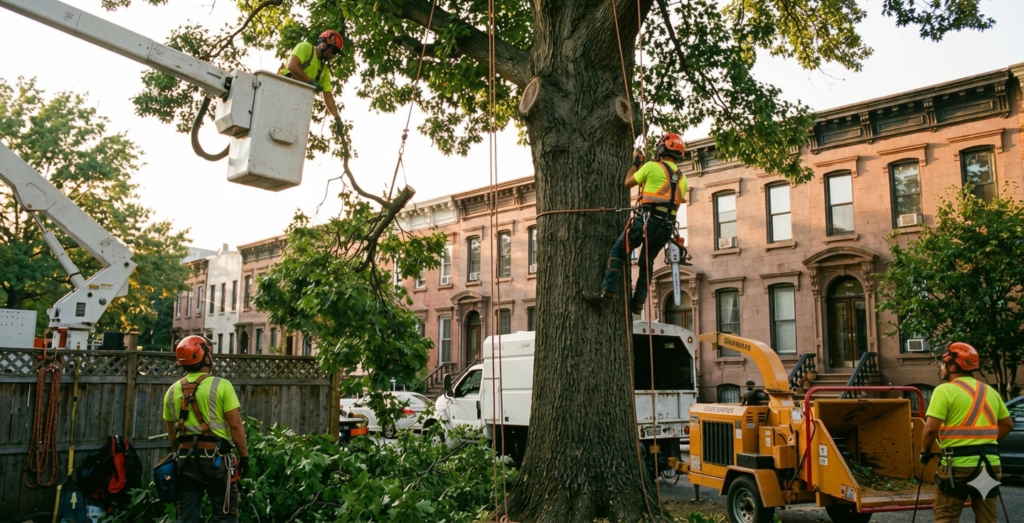
If you are reading this, it likely means that a tree has fallen, or is about to fall on your Manhattan property and you need answers quickly. When it comes to a crisis, it is easy to panic and pay more than is necessary, because there is no time to leisurely talk to a few agents to get quotes. Manhattan backyards are known for being landlocked and hard to access, so special skills and extra costs are associated with emergency extractions. For 2026, you can expect to pay anywhere from $1,500 to $5,000+ to safely remove a hazardous tree. Finally, before you agree to a late-night emergency quote, here is a comprehensive guide on the pricing process, so you can only pay for the services you need.
Standard vs. Emergency Pricing: Understanding the Premium
A standard, scheduled tree removal is planned weeks ahead of time so that a crew can plan their routes, obtain permits during a normal business day and work in a non-disturbed manner. Emergency tree removal is a completely different ballgame.
What Constitutes a True Emergency? A tree situation is deemed to be an emergency when the tree has the potential to pose a threat to human life, has already caused a structure to fail, is interfering with the use of primary vehicles by emergency responders, or is involved with active utility and power lines.
On a Sunday storm, calling an arborist at 2:00 AM results in a baseline price spike for several important reasons:
- 24/7 Rapid Mobilization: Companies must activate on-call crews, paying premium overtime and hazard wages to get technicians on-site within hours.
- Complex Rigging & Protection: Workers are often operating in the dark, under high winds, or in pouring rain, requiring advanced illumination and specialized safety gear.
- Liability & Risk Exposure: Dropping heavy timber in tight urban spaces next to multi-million-dollar real estate carries a massive liability load, driving up insurance overhead for the operator.
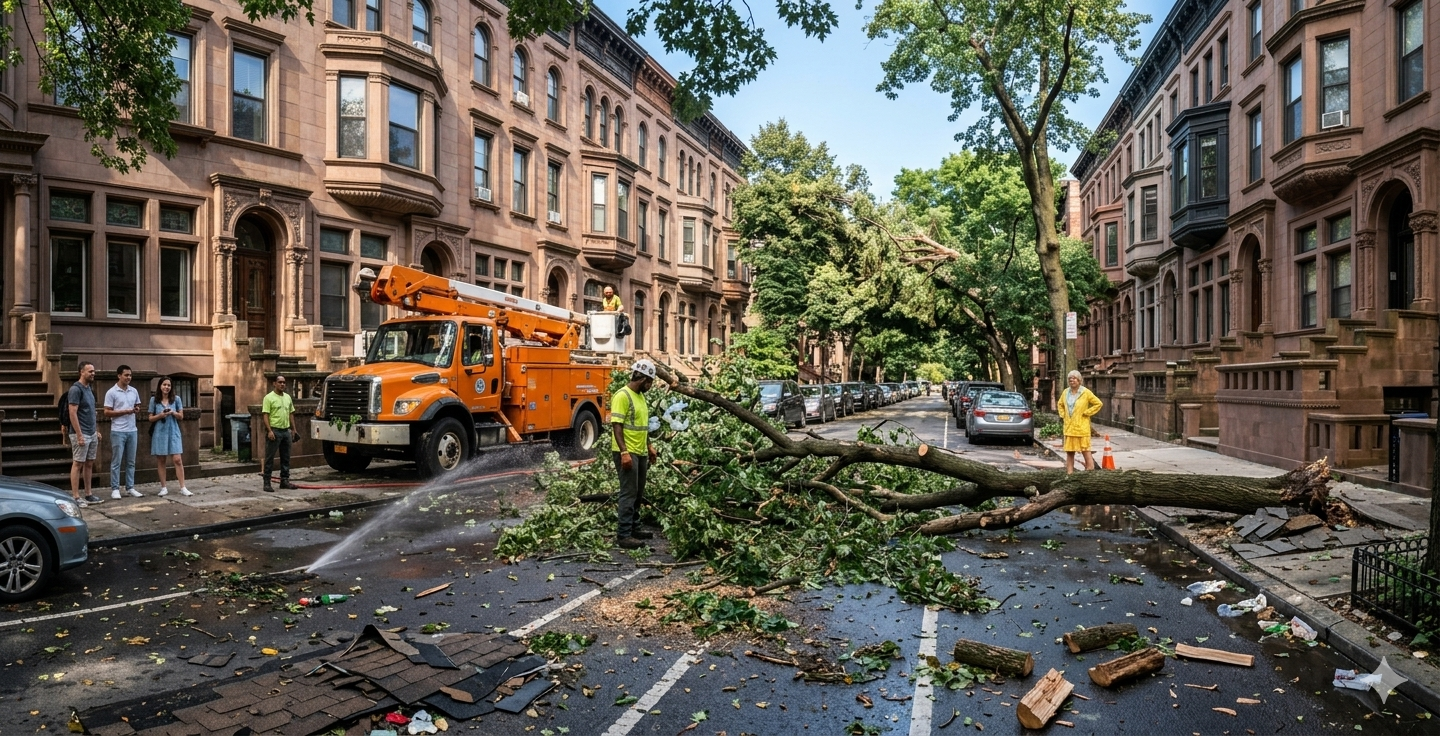
Estimated Cost Breakdown of Emergency Tree Removal in Manhattan (2026)
No two Manhattan properties are identical, so pricing is heavily customized, depending on the physical size of the hazard. A tree down on the ground is easier to cut up while a standing, unstable tree needs careful, step-by-step rigging.
The table below shows the usual fee ranges for emergency extractions throughout the borough:
| Hazard Classification | Average Emergency Cost Range | Common Scenarios & Examples |
| Minor / Pre-Fallen | $750 – $1,800 | A small tree under 30 feet that has completely collapsed into a courtyard, requiring no complex vertical rigging or climbing. |
| Moderate Risk | $1,800 – $3,500 | A 30-to-60-foot tree leaning heavily toward a structure or blocked alleyway; requires careful, piece-by-piece standard climbing and lowering. |
| Severe / Extreme Risk | $3,500 – $7,500+ | A massive tree over 60 feet tall hanging directly over power lines, historic roofs, or public sidewalks; requires cranes, street closures, and extensive rigging. |
The Core Cost Drivers Unique to Manhattan
If you are comparing costs with suburban areas or even other outer boroughs, Manhattan pricing can look shockingly high. This discrepancy is driven by the dense, hyper-urban nature of the island.
- Spatial Constraints and Accessibility
Backyards in neighborhoods such as the Upper West Side or Chelsea are frequently “concrete donuts” that are surrounded by four-story buildings. In the event of a tree failure in one of these courtyards, crew members are not able to use a heavy bucket truck or a hydraulic loader to access the tree trunk.
Rather, they must transport heavy chainsaws and rigging gear through the interior corridors of a residential building, or use huge, special cranes that lift heavy logs over a multi-story roof line. The additional cost of equipment if a crane is needed can push the bottom line price thousands of dollars higher.
- Pedestrian Safety and Traffic Logistics
It’s easy to take down trees on a suburban lawn. This feat is only possible on a bustling Manhattan avenue with absolute control. A large number of pedestrian detours, safety netting and ground spotters are required. A logistical coordination of the tree move and the necessity of municipal safety measures are naturally considered in the final quote if the tree will necessitate the closing of a public roadway or sidewalk, even if the closing is only partial.
- Utility Line Entanglement
If the tree is leaning on a power, cable or telecom line, and has snapped, private tree crews may not access the tree until the utility company (in Con Edison’s case) comes out to the site to turn off the power and ground the lines. The additional stand-by time that crews must wait for the utility companies to clear the area contributes to the total amount of labour hours.
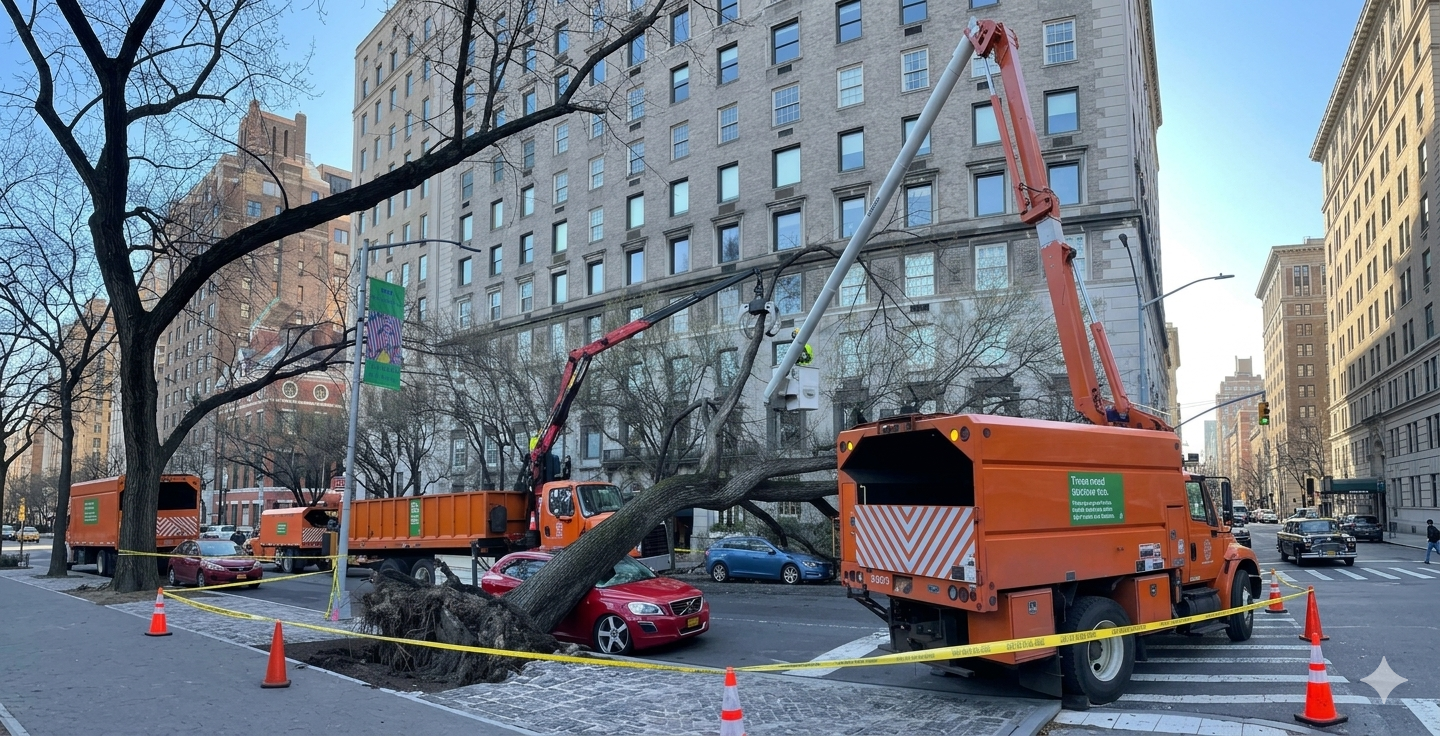
Will Homeowners Insurance Cover the Cost?
In many cases, yesbut the fine print matters tremendously. Your homeowners policy will usually require that the tree falls as a result of the cause of loss identified in the policy, such as the tree falling from heavy ice, lightning or sudden windstorm.
- The Property Trigger: In order for the insurance to pay out for the actual removal costs, it is a requirement that the tree has caused structural damage to a covered asset of the property (e.g., it may have punctured your roof, or broken a deck or blocked your primary driveway).
- The “No Damage” Pitfall: If the tree does not damage anything during the storm (and if it doesn’t fall in the middle of your paved courtyard, but rather in the corner where no one can get hurt), insurance companies will often refuse the claim, as debris clearing is considered property maintenance.
-
- The Negligence Clause: When the insurer decides that the tree was dead, rotting and neglected for years before the storm, they may refuse to cover any damages and it would be completely due to their failure to maintain property.
Navigating the Crisis Process Safely
If you are currently looking at a hazardous tree on your property, keep your cool and follow a structured protocol to minimize financial and physical damage.
- Evacuate the Target Zone:
If there are signs of a large tree leaning against your building or snapping audibly, get everyone and pets away from that side of the building right away. When power lines are broken, maintain a distance of at least 30ft and contact 911.
- Photograph Everything Thoroughly:
Obtain clear, high resolution photographs and videos from various angles of the damage areas prior to starting saws. Make notes about the root failure, broken limbs and any structural damage to your home to hold onto for your insurance adjuster.
- Confirm Licensing and Liability Coverage:
On the day of the contractor’s arrival, make sure he is insured for New York State Workers’ Compensation and has comprehensive general liability insurance with a rating for urban tree removal. This will otherwise leave you liable if your on-site crew is injured.
- Authorize Emergency Stabilization First:
Don’t forget to have your tree removal company stabilize the tree with an emergency removal cutting before they begin to prune away limbs that are hanging on the house, if the job seems beyond your budget at the moment.
Red Flags & Hidden Fees: How to Avoid Price Gouging in a Crisis
Unfortunately, time is of the essence during a tree emergency and this is when the unscrupulous operators are likely to pad their bill. Though emergency prices are entirely normal, there is a fine line between a reasonable hazard rate and price gouging.
When calling for an emergency quote, be sure to ask if the following common “hidden fees” will be assessed to your final bill or included:
- Debris Hauling and Disposal Fees: Cutting down a tree isn’t enough. It’s very costly to bring heavy timber out of Manhattan and pay commercial dumping fees. Check to see if the quote covers full clean up and wood removal, or if they are simply going to pile the logs on your curb.
- Emergency Tarping and Roofing Protection: If a limb punctures your roof or smashes a window, a premier emergency crew shouldn’t just cut the wood and walk away. They should agree to securely tarp the exposed building to prevent further water damage from the storm. Verify whether there is an extra line item fee for this simple stabilization of property.
- Travel and Standby Premiums: If a company is stuck in Manhattan traffic or forced to wait for hours for Con Edison to turn off a live power line, some contractors might try to charge you for that idle stand-by time. Make sure to specify from the beginning who will take the hit when the municipality or utilities is late.
Getting these details in writing even via a quick text message or email quote before they start engine-revving their chainsaws is your best defense against an unexpectedly inflated final bill.
Securing Expert Help in Manhattan
In an urban area where buildings and homes are built close together, when structural timber is damaged, you cannot depend on unqualified handymen or storm chasers from out-of-state. What you are looking for is quick action from a team that is familiar with the complex architectural challenges, insurance claim scenarios and stringent safety regulations that must be followed on Manhattan Island.
Rely on Manhattan Tree Services and their professional and dedicated staff for transparent, fully insured 24/7 emergency intervention without compromising the integrity of your property. Whether you need to rig up complex systems or need immediate attention to mitigate storm damage, they are there to provide the promptness and specialized services you need to ensure the safety of your home when it’s most important.