Caring for trees in a densely populated urban area like Manhattan is a significant challenge. Tall buildings, busy roads, underground utilities, and limited space are prevalent everywhere, making it difficult for trees to grow and remain healthy. During these challenges, urban trees are important for Manhattan because they decrease pollution, provide shade, help control temperature, and maintain the city’s overall beauty.
Even with the pressures of urban life, guaranteeing tree survival and proper care requires a responsible and well-maintained method. In this content, we will discuss in detail the challenges of urban tree care in Manhattan, the problems that come and how experts and communities can work together to keep these trees healthy.
Manhattan’s Urban Environment and Its Impact on Trees:
Manhattan’s urban environment is discussed as a unique one worldwide. Land value is very high, which results in very limited open spaces. Trees are commonly planted in small sidewalk gullets, midpoints, or close to buildings where soil volume is minimal. Limited soil means limited nutrients and water, which directly affects tree growth.
Also, underground pipelines, subway lines, and cables check natural root development. In such an environment, simply keeping trees alive is an achievement, while achieving healthy growth becomes even more difficult.
Limited Space and Root Growth Challenges:
In crowded areas, the main challenge is the lack of space for root growth. Tree roots naturally need to spread far and wide, but in Manhattan, concrete and pitch block their path. When roots do not have enough space to grow, trees become weak, leading to stability issues.
Such trees are more likely to fall during storms and strong winds. Limited root space also reduces water absorption and nutrient uptake, which negatively impacts leaf quality and overall tree health.
Soil Quality and Compaction Challenges:
Soil in Manhattan is commonly compacted, especially along sidewalks and roads. Heavy foot traffic, cars, and construction activity harden the soil to the point where water and oxygen cannot properly reach the roots. Poor soil aeration can suffocate roots, placing trees under stress.
Also, urban soil commonly lacks organic matter, disrupting nutrient balance. In such conditions, soil improvement and the use of specialized methods become important.
Air Pollution and Tree Health:
Due to traffic and commercial activity, air pollution is a serious issue in Manhattan. Gases discharged by cars, along with dust and particulate matter, settle on leaves and slow down the process of photosynthesis. Long-lasting exposure can damage leaves and affect tree growth.
If a tree is already weak, the impact of pollution becomes even more severe. That is why selecting pollution-tolerant species and using plans such as regular cleaning are very important in urban tree care.
Water Management and Drainage Problems:
Water management is another main challenge in urban areas. In Manhattan, rainwater commonly does not absorb properly into the soil and instead flows toward storm drains. As a result, trees do not receive the natural moisture they need.
Sometimes, the opposite problem comes, where poor drainage causes water to collect around roots, leading to root rot. Balanced water management is an important part of urban tree care and requires careful planning and monitoring.
Heat Island Effect and Temperature Stress:
Concrete buildings and concrete roads in Manhattan absorb and retain heat, causing city temperatures to be higher than those in the nearby areas. This phenomenon is famous as the heat island effect. Too much heat directly affects trees, especially during the summer months.
Leaves can burn, water loss increases, and trees may suffer from dehydration. Ironically, trees themselves help reduce the heat island effect, but without proper care, they cannot withstand this level of stress.
Construction Activity and Tree Damage:
Construction activity in Manhattan is almost stable. New buildings, road repairs, and groundwork projects pose continuous threats to trees. During construction, roots can be cut, soil disturbed, and trunks damaged by heavy machinery.
Sometimes trees are removed uselessly simply to make construction easier. Without proper planning and protective measures, the survival of urban trees becomes very difficult.
Trimming and Maintenance Issues in Urban Areas:
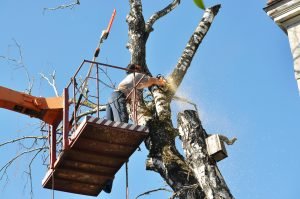
In an urban environment, trimming is important not only for beauty but also for safety. In Manhattan, it is important to keep trees clear of power lines, buildings, and walkable areas. Still, over-trimming or improper methods can weaken trees. Balanced trimming that maintains natural shape and health is a skilled plan that should only be performed by trained experts.
Insects and Diseases in Urban Trees:
In crowded areas, pests and diseases create unique challenges. Trees under steady stress are more vulnerable to insects and fungal infections. In Manhattan, diseases can spread quickly from one tree to another because trees are commonly planted close together. Early detection and preventive care are important to control problems before they become severe.
Tree Species Selection in Manhattan:
Selecting the right tree type is an important part of urban tree care. Not every tree can survive in Manhattan’s conditions. Types must be chosen that can tolerate pollution, grow in limited soil, and manage urban stress.
Local and adjustable types are commonly more successful because they adjust better to local climate and conditions. Selecting the wrong types can lead to higher maintenance costs and long-lasting failure.
The Role of Expert Gardeners:
In a hard urban environment like Manhattan, expert gardeners play a very important role. They do more than just tree cutting or trimming; they develop complete urban tree management plans.
Gardeners provide options with soil testing, tree health reviews, and danger estimates. Their experience is very valuable in maintaining trees safely and legally in crowded areas.
Long-Lasting Planning and Supportable Urban Forestry:
Urban tree care in Manhattan requires long-lasting planning rather than short-term solutions. The concept of sustainable urban forestry guarantees that future generations can also benefit from healthy trees.
This includes regular monitoring, replacement planting, and smart base design. When trees are prioritized in city development plans, a balance between urban life and nature is maintained.
Conclusion:
Urban tree care in Manhattan is a challenging, still important plan. When these challenges are managed with proper planning, expert car,e and community support, urban trees can do more than survive; they can thrive.